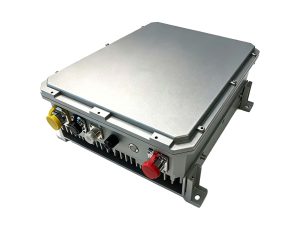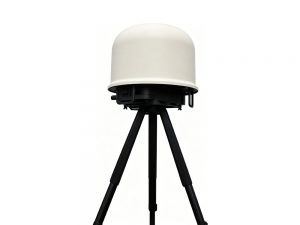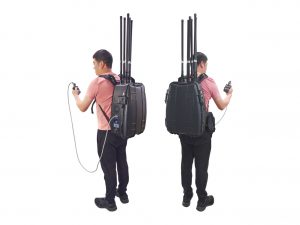
Starlink jammers sit at the intersection of satellite communications, radio interference, and export compliance. For exporters, the key question is not whether a device mentions Starlink. It is whether the item functions as jamming equipment, who will use it, and where it is going. A misclassified shipment can turn a routine transaction into a civil or criminal enforcement matter.

This article is for compliance education and does not constitute legal advice. Classification is item-specific and depends on technical characteristics, end use, end user, and destination.
The Starlink Name Does Not Create a Separate ECCN
Export control classification is capability-based. Regulators examine frequency range, output power, antenna design, selectivity, software, and intended use. A product marketed as a “Starlink jammer” may be analyzed as radio jamming equipment under the U.S. Export Administration Regulations (EAR), or as military electronics under the International Traffic in Arms Regulations (ITAR).
The Starlink brand may raise end-use concerns, but it does not create a unique export control classification. The jamming function does.
Primary U.S. Classification Paths
| Classification route | When it may apply | Compliance focus |
|---|---|---|
| EAR ECCN 5A001.f | Jamming equipment specially designed to intentionally and selectively interfere with, deny, disrupt, or degrade radio communications | Often the first EAR entry to review for commercial jammers; verify technical specs and control text |
| EAR ECCN 5A991 | Telecommunications equipment not controlled by 5A001 | Rare for true jammers because 5A001 takes precedence |
| EAR ECCN 5A980 | Telecommunications equipment not controlled elsewhere | Unlikely for jammers; only after ruling out other entries |
| USML Category XI | Military electronic equipment, including certain countermeasures and jamming systems | ITAR jurisdiction; DDTC authorization may be required |
| OFAC sanctions | Sanctioned destinations, parties, or sectors | Separate from ECCN analysis; no classification can cure a sanctions violation |
A common mistake is assuming that because a jammer targets Starlink, it falls under a satellite-specific ECCN. In practice, the jamming capability usually drives the classification. If the device is specially designed for military use, ITAR may apply instead of the EAR.
License Requirements Depend on Destination and End User
Even if ECCN 5A001.f applies, the license requirement is not automatic for every destination. Exporters must check the Commerce Country Chart, the end user, and the end use. National security, anti-terrorism, and other control reasons may apply. License exceptions are narrow, and many exclude jamming equipment or military end uses.
| Trigger | Why it matters |
|---|---|
| Destination | Country Chart determines whether a BIS license is required |
| End user | Military, intelligence, police, or sanctioned parties increase risk |
| End use | Interference with satellite communications may signal a prohibited or sensitive use |
| Reexport | Sending a U.S.-origin item from one foreign country to another may still require authorization |
| Deemed export | Releasing controlled technology to a foreign national in the U.S. may be a deemed export |
| Software and technical data | Source code, firmware, training, and manuals may be controlled separately |
If ITAR applies, a DSP-5 or other DDTC authorization may be necessary before any export, reexport, or transfer. If the EAR applies, exporters must confirm whether a BIS license or valid license exception is available before shipment.
Common Classification Mistakes
| Mistake | Better approach |
|---|---|
| “It is just telecom equipment.” | Review the jamming function first; 5A001.f may apply. |
| “It only targets Starlink.” | Target brand does not determine ECCN; capabilities and end use do. |
| “It is for civil protection.” | Civil use does not automatically remove export controls. |
| “We only export software.” | Controlled software and technology can require authorization. |
| “Our foreign distributor will handle it.” | The original exporter still has reexport and diversion responsibilities. |
Documentation That Supports a Defensible Classification
A strong compliance file should include:
-
A written classification memo with the technical basis for the ECCN or ITAR determination.
-
Detailed product specifications, including frequency bands, power output, antenna type, and selectivity.
-
End-user and end-use statements that match the actual deployment.
-
Screening records for restricted parties, sanctioned countries, and denied persons.
-
A review of marketing materials to ensure claims do not contradict the classification.
-
Training records for sales, engineering, and shipping staff.
-
An audit trail showing who approved the classification and when.
Enforcement Reality
Starlink Jammers are not ordinary telecom accessories. In the United States, operating or marketing jammers can violate FCC rules on radio interference. Exporting them without the required authorization can violate the EAR or ITAR. Penalties may be civil or criminal and can include fines, denial of export privileges, and imprisonment.
For companies in the satellite, defense, or communications sectors, the safest approach is to treat Starlink jammers as high-risk items from the first inquiry. Start with ECCN 5A001.f, confirm ITAR jurisdiction, screen all parties, and document every classification decision. When the facts are unclear, seek legal review before any transfer.