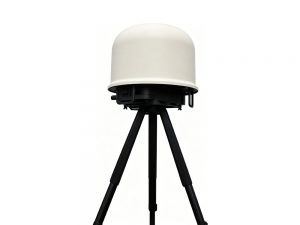
In this article, “Starlink jamming” means intentional RF interference aimed at Starlink links or terminals—not interference caused by Starlink. The short answer to the headline question is: not automatically, but under specific spectrum and geographic conditions, yes. Jamming does not check a receiver’s brand. It affects whatever is tuned to the same frequency, in the same area, with enough exposed power.
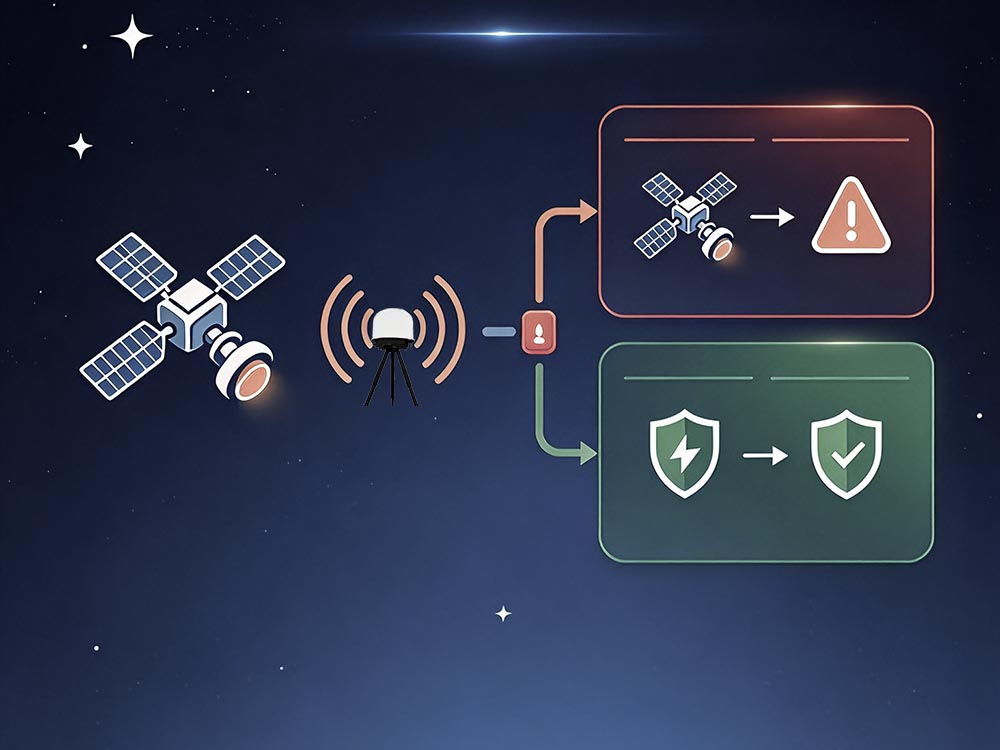
Starlink operates in Ku- and Ka-band frequencies that are also used by GEO operators, NGSO constellations, VSAT networks, government SATCOM, and broadcast services. That shared spectrum is why collateral impact is possible. It is also why the effect is rarely global or uniform.
The deciding factors are physics, not logos
Whether jamming aimed at Starlink harms another satellite service depends on frequency overlap, jammer power, antenna patterns, polarization, distance, and receiver filtering. A narrow, low-power jammer near a Starlink user terminal may only disrupt that terminal. A wideband, high-power jammer can raise the noise floor for nearby Ku/Ka-band receivers and cause packet loss, reduced throughput, or link loss.
| Scenario | What is targeted | Could other satellite services be affected? | Key condition |
|---|---|---|---|
| Local downlink jammer near Starlink user | Starlink Ku/Ka downlink | Possibly | Nearby receivers use same band/polarization and see enough jammer power |
| Uplink jammer near Starlink gateway | Starlink uplink to satellite | Less likely, but possible | Same frequency, direction, and orbital geometry |
| Wideband or adjacent-band jamming | Multiple Ku/Ka links | More likely | Out-of-band emissions enter victim receiver passband |
| Beam-focused jamming | One NGSO beam or region | Usually limited | Beam footprint and frequency reuse plan |
| GNSS jamming | GPS/GNSS timing | Indirectly possible | Services relying on GNSS timing or positioning |
Where collateral interference is most plausible
The highest risk is local. If a jammer is deployed in a conflict zone or near a dense satellite terminal cluster, non-Starlink Ku/Ka-band users in the same area may notice degraded service. This is especially true for VSAT terminals, mobile satellite links, and other NGSO user terminals that lack advanced interference mitigation.
Adjacent-band interference is another concern. A jammer built to hit Starlink may produce unwanted emissions outside its intended bandwidth. If those emissions fall into a neighboring satellite service’s passband, poorly filtered receivers can be desensitized. Regulators manage this through emission masks, guard bands, and coordination rules.
Where the risk is lower
Uplink jamming is generally harder to spread across unrelated satellite services. A jammer must point in the right direction and transmit in the right frequency to interfere with a specific gateway or satellite uplink. GEO satellites in different orbital slots, or NGSO satellites using different beams, may not receive harmful interference at all.
Starlink’s inter-satellite laser links are also immune to RF jamming. That does not make the entire network jam-proof, because user and gateway RF links can still be targeted. But it limits how far a single RF jammer can disrupt the constellation’s backbone.
Regulatory and operational reality
Intentional jamming is illegal under ITU Radio Regulations and most national laws. Administrations are expected to prevent and resolve harmful interference. In practice, attribution is difficult. Operators may see elevated noise, packet loss, or reduced throughput without knowing whether the source is a jammer, a faulty transmitter, or a natural interference event.
Public evidence that Starlink jamming has caused widespread outages for other commercial satellite services remains limited. The more likely outcome is localized degradation in the same band, particularly in conflict zones or near high-power jammers.
Bottom line
Does Starlink jamming affect other satellite services? It can, but not in a simple or universal way. The risk rises when the jammer shares the same spectrum, operates near other receivers, or produces wideband emissions. The risk falls when services use different frequencies, different orbital geometry, or strong interference mitigation. For satellite operators, the practical lesson is clear: spectrum monitoring, adaptive coding, beam switching, and regulatory coordination remain essential—even when the intended target is Starlink.